Good morning Wisconsin,
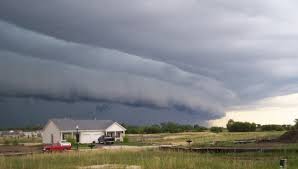
It’s Tuesday and I hope you had a great Monday and even better day today! We’ve talked about thunderstorms, tornadoes, hail, and now we need to talk about damaging winds. Damaging winds, often called “straight-line winds,” form when heavy, rain-cooled air (a downdraft) descends rapidly from a storm, hitting the ground and spreading outward at high speeds, sometimes exceeding 60-100mph. These winds are created by strong precipitation dragging air down, with evaporative cooling increasing air density.
- Downdrafts & Downbursts: As precipitation (rain/hail) falls, it drags cold air from the upper atmosphere down toward the ground. When this sinking air hits the surface, it spreads out, creating powerful horizontal winds.
- Evaporative Cooling: Rain falling through dry, cool air causes evaporation, which cools the air further. This cold air becomes much denser and heavier than the surrounding air, causing it to accelerate toward the ground at high speeds.
- Microbursts/Macrobursts: These are intensely concentrated downbursts. A microburst creates a small, highly destructive area of downward air, resulting in severe damage with winds spreading radially from the center.
- Gust Fronts: The leading edge of this cool air outflow creates a “gust front,” which can cause abrupt, damaging winds ahead of the storm.
- Squall Lines: When thunderstorms organize into a line (squall line), they can generate widespread, damaging winds, sometimes producing a Derecho
What the heck is a derecho? A derecho is a widespread, long-lived, fast-moving windstorm associated with a band of severe thunderstorms, known for producing straight-line winds, rather than rotational winds, over a swath exceeding 240 miles (400 km). They create destructive wind gusts of 58 mph or higher, with some topping 75–130 mph.
-
- Destructive Characteristics: These storms cause damage similar to tornadoes or hurricanes but in a straight line. They are often characterized by a radar “bow echo” shape.
- Criteria: To be classified as a derecho, a system must have a damage swath over 240 miles long (approx. 400 km), with wind gusts of at least 58 mph occurring consistently throughout the storm, and a history of high wind reports .
- Timing: They typically occur in summer (May–August), especially during hot, humid weather, with 70% of occurrences during these months.
- Etymology: The name “derecho” is Spanish for “straight” or “direct,” coined to differentiate its straight-line damage from the rotational damage of a tornado.
Most of this information is from the NWS!