Good evening Wisconsin,
This morning we talked about how thunderstorms are formed. Tonight we are talking about lightning and lightning safety! Lightning can be deadly! It kills between 20-30 people per year in the US.
It has about a 10% fatality rate. Here are some lightning facts:
- Temperature & Intensity: A lightning bolt can reach and contains up to 1 billion volts.
- Speed & Power: Lightning moves 30,000 times faster than a bullet. A single bolt can power a 100-watt light bulb for over 3 months.
- Causes Thunder: The rapid heating and expansion of air surrounding a lightning bolt creates the sound wave known as thunder.
- Distance & Safety: “Bolts from the blue” can strike 10-15 miles away from the rain center. If you hear thunder, you are close enough to be struck.
- Types & Frequency: While most lightning is within clouds, cloud-to-ground strikes are common. Globally, there are about 40 lightning strikes per second.
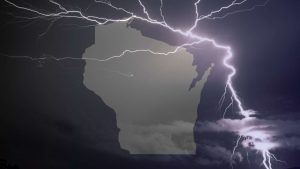
- Danger Zones: Wisconsin averages 20-30 days of thunderstorms per year. Florida is the U.S. capital of lightning, averaging 70-100 stormy days per year. Lake Maracaibo in Venezuela has the most frequent lightning in the world.
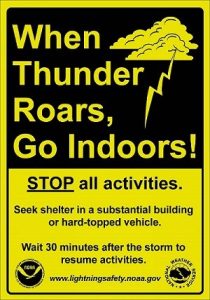
- Safety Tips: Immediately seek shelter in a substantial building or hard-topped metal vehicle. Avoid plumbing, corded electronics, and concrete floors.
Lightning Safety:
In this section I will give examples of what to do when lightning is in the area with different situations:
Swimming Pool: Always be weather aware when swimming. If you can hear thunder, then get out of the pool. It doesn’t have to be raining in order for a lightning strike. Keep an eye on the radar.
In your house: If there are storms in the area, then there’s things you need to avoid doing in your house. You may think you’re safe inside, but not always. Avoid any plumbing such as showering.
Avoid using electronics that are plugged in. If lightning were to strike your house, the electricity can travel through these sources and shock you.
On the lake: This is when you really need to plan ahead. If there’s a risk of thunderstorms that day, then maybe not go out on the lake. If a thunderstorm is in the distance and you’re on the lake, then get to shore
immediately. You’re a sitting duck out there. Lightning tends to strike the highest object in the area. It can also travel through water.
Outside not on the lake: This can be good info for the golfers and hikers. Again, please be weather aware when you are outside and especially while golfing or hiking. If a thunderstorm hits and you are out there,
then you need to seek shelter right away. Golf courses usually have some type of structure on the course you can hide under. DO NOT take cover under a tall tree. That lightning can strike the tree and send the
shock to you. Lightning can also blow up and take down trees.
If there’s anything else you want to add, then please chirp in on the Facebook post.